

Saskatchewan’s New Class Complexity Teachers
By: Lance Hiltz, STF Communications
Krista Berzolla began her 29th year of teaching in an entirely new role at Saskatoon’s Father Vachon School. She’s just one of approximately 500 new class complexity teachers introduced in schools across Saskatchewan this fall. The new role is a result of a new article awarded through arbitration and included in the 2023-2026 Provincial Collective Bargaining Agreement.
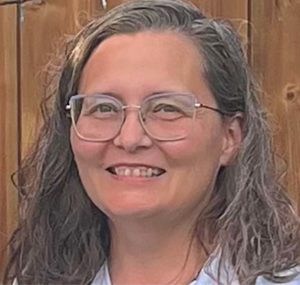
Krista Berzolla teaches at Father Vachon School in Saskatoon.
Berzolla notes that the new role is being developed as they go. Last June and again in August, she met with her school’s administrative team to set priorities and create a tentative schedule for the year ahead. They worked together to create a vision for what the class complexity teacher role would look like in their school, and how it would benefit their students’ unique needs. She spent time over the summer creating planning documents to help ensure that her work is student-driven and aligns with the work and needs of her colleagues.
The class complexity teacher role is described in Article 17 of the 2023-2026 PCBA with duties that “may include, but are not limited to, one-on-one behavioural/safety interventions, individual or small group programming to address specialized learning needs of students, acute learning needs, modifications or adaptations of programming, counselling services, self-regulation education, etc.”
“The staff has been very supportive and accommodating of me, welcoming me into their classes. Teachers are comfortable to co-teach lessons with me and students are comfortable with me teaching them because I have been in their [class]rooms since the beginning of September,” says Berzolla. “The teachers and I collaborate to build a plan that will be differentiated to help meet the varied needs of students. We then co-teach daily and function as a team to deliver instruction.”
As part of her planning process, Berzolla first met with teachers in her school to get a detailed understanding of their classroom dynamics, the students and their various requirements. For the month of September, Berzolla worked with all Grades 1 to 8 classrooms, providing social-emotional learning instruction and going over school-wide rules and routines. This allowed all classes to learn the same terminology and concepts. Father Vachon School was a specialized support classroom pilot school, and the provincial funding from that program supported the development of a positive learning behaviour framework rooted in job-embedded support, strengthening positive learning behaviours through trauma-invested practices and social-emotional learning. Together, Berzolla and the teachers she works with use the positive learning behaviour framework to outline the focus and direction of her role.
“Time in classrooms has provided me the opportunity to get to know most of the students and staff in the school and observe class complexities firsthand,” she says. “I have brief weekly collaboration meetings with the teachers I work with to discuss future planning and student progress. The collaborative nature of this approach is key – we are working together to address complexities and to build a safe, enriching learning environment.”
From October to January, Berzolla is working with four teachers in Grades 4 to 8 classrooms. She will work with a new group of four teachers in these grades from February to June. “In addition to this, I lead a social skills group for students in need of that support, and a small weekly group focusing on executive functioning. I am also available to support students who are dysregulated and need support to help them regulate. This means I pivot quickly and sometimes need to triage my work.”
Saskatchewan Teachers’ Federation President Samantha Becotte sees this new role as an important first step to address complexity issues in schools. “Through the class complexity teacher role, teachers have access to additional resources to support their practice, collaborate\ and determine what their students need to succeed,” says Becotte. “The inclusion of complexity provisions within our provincial agreement was only possible thanks to the incredible efforts of our membership, and it is very exciting to see those hard-won resources making positive impacts in classrooms.”
“We are very appreciative of the additional support for class complexity in our schools this year, and very excited about the opportunity to continue learning and developing the role alongside colleagues across the province,” says Terri Fradette, superintendent of education with Greater Saskatoon Catholic Schools. “As the role develops, we have a chance to learn from the successes and challenges, and make sure we meet the greatest areas of need within each school’s context.”
Last spring, Fradette and her team convened a small committee of GSCS principals to help co-construct a framework for what shape the class complexity teacher role would take in their schools. Exploring the purpose, guiding principles and role of a class complexity teacher within their student learning model, the committee brought a framework forward to all GSCS principals, vice-principals and assistant principals to get feedback. From there, school principals worked with their teachers to actualize the framework to best support their students’ needs and their school’s environment.
Fradette and STF Professional Learning Associate Director Denise Heppner shared resources to design a session for GSCS class complexity teachers, based on the framework developed with GSCS principals. Heppner delivered the session to approximately 40 class complexity teachers last August.
“It was very clear early on that a one-size-fits-all solution was not going to fit,” says Fradette. “As good stewards of our schools’ resources, it is important for us to monitor the role’s impact and make sure the teachers and students in each building are getting what they need. One thing that has come to the forefront is that in some of our larger schools, the allocation of resources can feel very stretched. At this point, though, we are very excited for the infusion of support we’ve had.”
Per the provincial agreement, every school with a student population over 150 gets one full-time certified teacher, and every school with a population of 75-149 students gets one half-time teacher, assigned to address classroom complexity.
“This is a good start, but there is more work to do,” says Becotte. “Right now, a school with 150 students and a school with 1,200 students each get one class complexity teacher. As this new role is implemented, we are learning more about what we can improve in future rounds of negotiations.”
On September 4, 275 attendees from across Saskatchewan – including class complexity teachers, principals and school division personnel – took part in an STF Professional Learning virtual session that Heppner designed and delivered, called Navigating Complexity: Launching the Class Complexity Teacher Role in Saskatchewan Schools.
“The creation of the class complexity teacher is a groundbreaking moment in the history of Saskatchewan education,” says Heppner. “Every one of the class complexity teachers in place across the province is contributing to defining and shaping the new role, which is very exciting.”

Rob Heppner is a class complexity teacher at Waldheim School.
Rob Heppner took on the class complexity teacher position at Waldheim School last spring. He worked with Denise Heppner to create a PowerPoint presentation that he used in his school to help staff identify their own class complexity issues.
“I shared the presentation during a staff meeting last spring to get the staff’s voice, because they’re the ones who know what the complexities are,” says Rob Heppner. “I was able to take the data and feedback and break it into six different areas that were identified as complexities specific to our school. That gave me a great framework to get started with the role in the fall. It is a very exciting position to be in as we collaborate, build relationships and start to see results for students.”
Waldheim School principal Diana Jemieff describes the new role as a “massive success” for her school. “Prairie Spirit School Division has been guiding us with frameworks and potential ways to track the role, but I appreciate that they allow us to gather our staff’s voice and shape the role to our individual school’s context,” she says. “I would say the new class complexity support has lowered the water line for everyone in our building by taking what was once an unreasonable workload and making it feel much more manageable.”
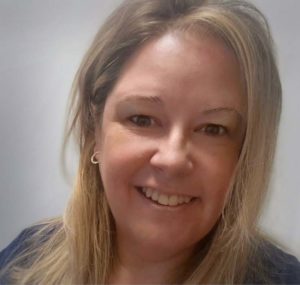
Davina McMain teaches at Dr. Isman Elementary School in Wolseley
Building community among class complexity teachers has been a crucial part of the development of the role across the province. Over the summer, Davina McMain started a private Facebook group called Saskatchewan Complexity Teachers to create a space for class complexity teachers to find community, conversation and support among colleagues. McMain is in her 28th year as a teacher, now working 50 percent as a class complexity teacher, 40 percent as a student services teacher and 10 percent teaching math at Dr. Isman Elementary School in Wolseley. There are currently over 480 members in the Facebook group, including class complexity teachers, principals and school division staff.
“I felt a need to connect with colleagues who were also taking on this role,” says McMain. “Networking is essential to our success. People are using the platform to advertise opportunities for learning such as STFPL sessions. It has been a great platform for sharing ideas. As class complexity teachers are figuring out what the role is within their schools, the Facebook page has been gaining momentum. My hope is that engagement will increase as we move through the year.”
Denise Heppner has also promoted an online resource created for Saskatchewan’s class complexity teachers called the Class Complexity Connection, which was created to provide professional learning and opportunities for collaboration, learning and resource sharing among class complexity teachers across the province. In October, Denise Heppner invited class complexity teachers to join virtual guided conversation sessions in role-alike groups, meaning specific sessions for teachers in elementary, high school and kindergarten to Grade 12 schools. These sessions were an opportunity for teachers to discuss what is working well, common challenges, time and energy management strategies, useful documentation practices and collaborative supports. Similar opportunities and further professional learning sessions are being planned throughout the remainder of the year.
“It’s important to remember that this role was created to address class complexities, and while I am working to do that, I am not a magic wand,” says Berzolla. “I am one support for my classrooms, and my hope is that as the year progresses and we reflect on the work done, there will be benefits evident.”
* Editor’s Note: This story was written very early into the implementation of class complexity
From Saskatchewan Teachers’ Federation Bulletin – Winter 2025