

Arbos Award Recipients
Heather Kuttai
2026 Arbos for Distinguished Support of Education and the Teaching Profession
Heather Kuttai is an author, disability advocate and human rights activist who has spent three decades advancing equity and accessibility in education. With a background in disability policy, leadership and post-secondary administration, and 50 years of lived experience as a wheelchair user, she has dedicated her career to removing barriers for students and strengthening public institutions.
Heather has a bachelor of arts and master of science from the University of Saskatchewan. She is the author of Maternity Rolls: Pregnancy, Childbirth and Disability, and has written several chapters for textbooks on disability and body diversity. In addition to these accomplishments, she is a three-time Paralympic medallist in the sport of target shooting.
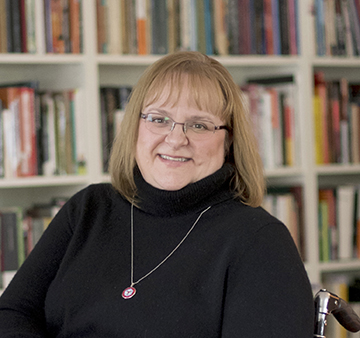
Heather’s commitment to supporting students and youth has shaped her leadership in classrooms, universities, community organizations and public institutions. She is known for her willingness to speak up when it matters most and for her unwavering support of teachers and students during moments of challenge and change.
Heather’s leadership extends across the community. She spearheaded the creation of both Disability Services for Students (now Access and Equity Services) and Student Central – a hub designed to make administrative and financial support easily accessible to students at the University of Saskatchewan – coached at the provincial and national levels, and contributed to organizations such as the Rick Hansen Foundation, Saskatoon Public Library, and the Saskatchewan Human Rights Commission. Her work has been recognized with numerous honours, including the Queen’s Platinum Jubilee Medal, the King’s Coronation Medal, and induction into both the Saskatoon and Saskatchewan Sports Halls of Fame.
Heather is known for her advocacy for children, public defense of teachers and a lifelong commitment to building inclusive learning environments. Her courage and advocacy have strengthened the profession and left a lasting impact on public education in Saskatchewan.A Conversation with Heather Kuttai
What is the inspiration behind your work supporting education and the teaching profession?
Whether it was acting as an ambassador for the Rick Hansen Foundation or just volunteering to come talk to a class by request of a teacher friend, the inspiration behind supporting education has always been simply about the children. Aren’t they why we do anything? They are our hope, and we owe them everything.
What has been the most rewarding part of your work?
The most rewarding part of my work, and to be sure, there have been many rewards, were some of the reactions I received when I resigned from being a commissioner with the Saskatchewan Human Rights Commission in protest of the provincial government’s use of the notwithstanding clause to push through Bill 137 that mandates teachers to obtain parental consent before using a student’s preferred name and pronoun at school. The same legislation forbids teachers from using third-party sexual health educators and experts in the classroom.
As the news spread and more people learned what I had done, there were many parents and teachers from all over the province that reached out to thank me, but the real reward was the reaction from children and young adults. One person told me they had been planning their suicide on the day they found out I had resigned. Other kids showed up on my doorstep and asked for a hug. I received a lot of thank-yous but the thanks really is mine. Standing up for our province’s kids was the greatest honour of my life and likely the most important work I have done.
What was a defining moment of your career?
My defining moment was when I ended my career as a human rights commissioner. I wrote a letter to the Premier, pushed Send, and 15 minutes later my phone “blew up” (as they say) and my life changed. I spent the next 30 days in a row in the media, in meetings, and talking to teachers, and even now, two and a half years later, I am still talking about it, and people are still asking me about it.
What challenges did you face during your career?
I have to say the steady stream of ableism has been and continues to be my biggest challenge. Sometimes it is overt, but a lot of the time, ableism is so deeply woven into every area of the environment we all live in, that it continues to affect me regularly. It shows up as inaccessible spaces, rigid attitudes, misguided policies, exclusionary practices and low expectations. Ableism is a powerful force.
What is one lesson that has stuck with you throughout your career in supporting education?
I have learned that children are not citizens lying in wait. As Canadians, we all “know” this, but we do not always behave as such. When I came to really see children as human beings who are born with a set of rights, my worldview shifted to one that understood that parents do not have rights – their children do though. And as parents and guardians and teachers, we all have responsibilities to do our very best by them, and sometimes that means we have to dig into our deeply held values and beliefs and question everything we thought we knew. It is a powerful lesson, but I am grateful I learned it.
Who are the people who helped shape your life and leadership approach?
I am fortunate to have had many positive influences. My dad, George Kuttai, who had a bigger and better imagination than everyone else for who I might grow up to be; my coach, Finn Petersen, who had an unreasonable amount of confidence in me that eventually translated into my own; my first (and best) boss, Vera Pezer, who understood that true leadership is having enough confidence to give away power; Senator David Arnot for being a constant example of doing the right thing for my community and my country; and my husband, Darrell Seib, who is a master at communication, and has taught me that the quality of the answer you receive depends entirely on the quality of the question you ask. I would be remiss to not mention my children, Patrick and MJ, who are the greatest teachers of life lessons I could ever ask for.
Katie White
2026 Arbos for Outstanding Contributions to Education and the Teaching Profession
Katie White is an author, coach and educational consultant with more than 30 years of experience dedicated to strengthening teaching and learning. A former system leader, administrator, learning coach and K-12 teacher, she has a rare, integrated understanding of curriculum, assessment, instruction, environment and system planning.
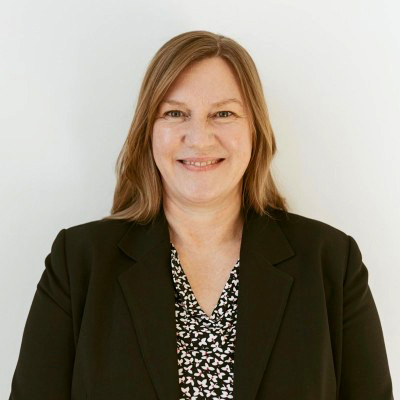
Katie is connected to the lived realities of teachers. Her guidance is practical, thoughtful and always focused on respect and admiration for the profession.
The positive influence Katie has had on education across the province is evident in her work with the Saskatchewan Teachers’ Federation, Ministry of Education, Saskatchewan League of Educational Administrators, Directors and Superintendents, and Saskatchewan Educational Leadership Unit. Her work is consistently centred on improving the learning experiences of students while elevating the professional lives of teachers.
She helps teachers develop their practice, while always honouring the complexity of classroom work.
Through her work, Katie has become a widely respected voice in assessment and instructional design. Her publications and professional learning sessions translate theory into practical strategies that help teachers create classrooms where students understand their learning and feel ownership over it.
Leaders across the province describe her guidance as relevant, inspiring and actionable. Her work supporting divisions, mentoring teachers and contributing to provincial initiatives has strengthened the profession, all while elevating teachers’ voices and improving the learning experiences for students. Her commitment to student success and teacher empowerment has impacted public education and makes her an incredible leader in the profession.
A Conversation with Katie White
What inspired you to pursue a career in education?
Upon graduating from high school, I had planned to pursue a career in law or broadcasting. But in the spring of Grade 12, I presented a speech in my senior English class and my teacher at the time, Harry Pitzel, asked me if I had considered being a teacher. While my dad was an educator, as well as two of my grandparents, it had not seriously occurred to me until that moment. But as soon as he asked, it made sense to me. I had been teaching community art classes and loved it, so I signed up and never looked back.
What did you love most about being a teacher?
This is tough to pin down because I cannot imagine a more rewarding career and that statement must mean I love a great deal about it. I love the variety and renewal – never a dull moment and every year has its own potential. I love the creativity of planning new approaches and imagining new ways of sharing ideas. I love that it leans into my need to communicate out loud and make sense of things alongside others. I love that it is human and relational. I love that learners bring themselves to the teaching-learning relationship and this means every interaction is unique. I have never been bored a day in my career, and I have also never taken that for granted. Lastly, I deeply and profoundly love children and youth. I see them as intelligent, funny, imaginative and intriguing. I cannot imagine a life that does not centre children as the reason I do what I do every day.
What challenges did you face during the course of your career?
Any complex experience has challenge within it, and I have to say that the challenges have invariably made me better, even though I did not always enjoy them. I have been challenged by feeling simultaneously overwhelmed and helpless sometimes. I always wish I could do more or do better. The consequences of our profession are front and centre and this means that the stakes feel high, which can be difficult. It is hard to leave the work, and balance has truly been elusive. In fact, lately, I am starting to accept that the urgency I often feel has made my life in education exponentially rewarding but also incredibly challenging. You need both, I think, to have a rich and rewarding career.
What career accomplishment are you most proud of?
I realize I have accomplished much and this rests in my passion and desire to be personally challenged – my mom calls it “driver behaviour.” Nevertheless, the accomplishment that sits closest to my heart is the gift of helping others. Honestly. When a learner tells me I have helped them or when I see others feeling empowered through the experiences I am facilitating, I am in my happiest place. I just want to be of service. Straight up.
What advice would you give a new teacher?
This profession is hard. Everyone will tell you that and it is true. It is hard because it matters. The way to be fulfilled is to know the importance of what you do, for children, youth and the literal future of the world. A teacher has to know it in their hearts and then lean into the joy of that role. Lean into the relationships you have with colleagues, the connection you feel with families and parents, and the absolute wonder of learning.
Care for yourself. I don’t just mean bubble baths and pedicures (although those are nice), but care for yourself by doing the things that make your spirit whole. Go for walks, make art, make music, play sports, and invest in family and community. This is so that you feel strong and so that students see you feeling strong. Teachers need to show students that life is joyful, multi-faceted and rich.
What is one lesson that has stuck with you through your career?
Education should be evolving and we should be evolving within it. Investing too deeply in a particular thing (a lesson, a unit, an approach, a gradebook, a score, a timetable, total silence, or firm predictability) will only lead to status quo and I really and truly believe status quo is not healthy or helpful for many people anymore. We need educators who are willing to stand up for the humans within the education system and reimagine teaching and learning, and schools and classrooms.
Past Recipients
You could say the motivation for Lori Jeschke’s teaching career arrived through the mail.When she graduated from Grade 12, her first job was with Canada Post, but it didn’t take long to realize that being a teacher was her true calling. It was a realization inspired by a love of teaching and learning instilled by her father, Art Priebe, an elementary school teacher for 30 years, and her mother, Clara Priebe, who taught piano for almost six decades.
Lori earned an education degree from the University of Saskatchewan in 1987 and began her teaching career with 36 students in a kindergarten, Grade 1 and 2 classroom at Laird School in the former Sask Valley School Division. During her eight years in Laird, she also taught Grades 5 and 6 and classes in Grades 7 and 8 and finally became principal in her last year there. A move to Hepburn School, where she remained for 12 years, brought Lori together with her father who taught Grade 4 in a classroom right across the hall.
After serving as vice-principal and principal at Hepburn, Lori took on the role of human resources principal for the Prairie Spirit School Division. That led to further leadership opportunities as coordinator of assessment and learning, superintendent of learning and leading, and four years as director of education before her retirement in 2021, following a 34-and-a-half-year career in Education.
Lori’s professional contributions included two terms as president of the Canadian Assessment for Learning Network and two years as co-chair of the Saskatchewan Director group in 2019-20. She co-facilitated national and international leadership and assessment opportunities and co-wrote Residency: Powerful Assessment and Professional Development (2016). Lori was a contributor with several authors writing on the topic of assessment and was one of the 108 irregulars for Michael Bungay Stanier’s book How to Work With Almost Anyone (2023).
Lori Jeschke remains a passionate and dedicated educator after a varied and well-rounded career serving and supporting learners and learning.
A Conversation with Lori Jeschke
What inspired you to pursue a career in education?
My parents were really passionate about serving and learning. I’m told that when I was three and four, I had stuffed animals lined up on stairs and around tables and I was teaching. I know that teaching was planted in my heart really early on. When I was in my teenage years, my dad was a classroom teacher and coach and he gave so much of his time and energy to his work, I thought that other kids got more of his time than I did. He impacted so many kids and families, and I knew that was who I wanted to be too. When I graduated from Grade 12, I got a great job at Canada Post but after a year it was like no, I want to teach. My parents instilled this love teaching and that stayed with me.
What did you love most about being a teacher?
I love the idea of being with other learners. It didn’t matter if I was the big learner and they were the small ones (in terms of height) or I was in a room with all adult learners – you can learn from anyone, right? So, for me, it was exciting to be part of the curiosity and wonder in classrooms and outside of them. I will never forget teaching Grade 1. It’s like a lightbulb comes on for students when they put letters and sounds together and can read words and suddenly their whole world is opened up. “Look at that Mrs. J, it says this on our wall! Or I just read a whole book, and I want to read more!” Then the fun of being a teacher is to continue to create spaces where that excitement and wonder can continue to grow.
I got to learn and work in a school division where our focus was on learning for life. We modelled what learning looked, sounded, and felt like across our division through My Prairie Spirit Classroom. What we asked Kindergarten students to do, we asked our Grade 11 and 12 students to do and also our principals and vice-principals and senior administration. Let’s learn and let’s learn how to learn was our focus. I think that’s the hugest part of getting to be a teacher – just getting to sit side by side with other learners and discovering things.
What did you find rewarding about your work?
The rewarding part of my work, I think, is just the beauty of being part of getting to learn and lead alongside so many incredible educators. At the heart of our work is always the goal of finding ways to support students and teachers. A huge part of that for me was our annual Learning for Life presentations from our schools and staff. Hearing stories from students, teachers, staff, school community council (SCC) members, parents and administrators about what worked and what didn’t and then what they planned to do next, was inspirational for me. We got to celebrate learning for life as a school division.
What challenges did you face during the course of your career?
The challenges, in a broad sense, would be the many hats that a teacher wears. Teachers are asked to be and do so many different things in a day. It’s quite remarkable. There are so many complexities around the charge of caring for small humans and big humans. They need to feel safe, feel cared for, and be successful. It’s not really something you learn in university courses. You don’t learn about how it feels to suddenly remember late at night that you promised one of your students you’d listen to their story and you forgot, or noticing someone didn’t have very much in their lunch, or how there were teachers in your staffroom who were trying to tell you they were just too tired and you still had them sit through a presentation at a staff meeting. Those are pieces of your heart that get tugged time and time again and you try to pay close attention every day so that you can do your best. I sometimes wonder what people would do if they had a camera in a classroom and saw all the things a teacher is actually handling throughout the day. I hope they would say ’thank you’!
What advice would you give a new teacher?
I would start with thank you. And probably add a few thousand thank-yous. I would say thank you for choosing what I believe is the most incredibly noble career. I would thank them for choosing this profession and for choosing it now. I say that because we’re in a time where the teaching profession is not respected and appreciated like it once was. My desire would be that teachers would be respected and celebrated for who they are and what they do everyday. They are caring for students, which is really the ultimate job! Teachers are a key part of the starting point in every other career. Teachers teach us how to learn and hopefully, how to love learning. We need that!
I would say get to know your why and let that be your guide in all your decisions. Focus on what’s important to you and find other colleagues that are willing to mentor you and learn alongside you and help you to grow. When you can learn and grow with others, there’s the support that you need to keep going and ultimately make the difference for all your learners. That’s what I found in my career, and I am forever grateful for that.
Tony Linner (BA 1970, B.Ed. 1972, PGD Ed Psych 1982) began his teaching career in the fall of 1972 with a contract at Riverside Collegiate in the Prince Albert Public School Division. Two years later he moved to Saskatoon Public Schools, teaching at Nutana and Mount Royal collegiates and as a guidance counsellor at Riverview Collegiate. In 1985, he became principal of Macklin School, a kindergarten to Grade 12 school located in the Kerrobert School Division.
Tony joined the STF’s senior administrative staff in August 1987. He identifies coordinating summer short courses and teacher exchange programs, pre-retirement seminar presentations, supporting the Income Continuance Plan and Counselling Services, and working with local associations on LINC negotiations as highlights, along with the opportunity to work closely with the STF support staff. Tony retired in 2002 after 15 years of service to the Federation.
He had served as a sessional lecturer in Educational Psychology and following retirement Tony continued to share knowledge gained as a teacher, counsellor and administrator in several ways: as a lecturer in Educational Administration at the University of Saskatchewan, a College of Education admissions interviewer, an instructor at Prairie West Regional Community College, and as an educational consultant with the Saskatchewan Office of the Treaty Commissioner.
Beyond education, Tony held leadership roles with several community and business organizations. He was on the board of TCU Financial Group for 18 years and was a public representative on the Saskatchewan Association of Licensed Practical Nurses board of directors, receiving an Honorary Member Award in 2013. He was a board member of Nutana Curling Club and served as president in 2021-22.
A Conversation with Tony Linner
What inspired you to pursue a career in education?
I was inspired by my parents and particularly my father, who did everything he could to encourage me to get as much education as possible, so I had options in career choice and job satisfaction. John Duerkop, my internship supervisor at Evan Hardy Collegiate, saw in me what I did not see in myself; an ability to inspire young people to achieve beyond their expectations.
What did you love most about being a teacher?
I loved the challenge of each new teaching year and each new semester. I have many occasions even today to meet former students and smile in knowing how well they have done in so many varied careers. Teaching is a lifelong endeavour, and I have been fortunate to be in situations where I have been able to continue learning and challenging myself as a teacher, guidance counsellor, administrator and person.
What did you find rewarding about your work?
The most rewarding aspect of teaching has always been in the personal, social and intellectual growth of the young persons I have taught and counselled at the high school, community college and university levels.
This extended further to teachers in my work with the STF where I had the honour to serve our profession and support teachers at the provincial, national and international levels. I strongly believed in teachers and their right to be supported in their profession. There are many critics who often have loud voices; I always thought my primary job at the STF was to provide support to the teacher when those voices became too loud or discouraging. I saw teachers move from despair and fear to pride and courage when they knew we would never back down in our support for them. As a teacher, it is important to know that you never stand alone.
What challenges did you face during the course of your career?
The greatest challenge was changing roles, but those challenges also resulted in the greatest growth. For example, moving from Saskatoon to Macklin and then from Macklin to the STF administrative staff brought on whole new responsibilities and tensions, which honed new skills as I moved from working with young people to working with adults.
What was a defining moment of your career?
The biggest career-defining moment was moving to Macklin as principal of a K-12 school. It took every skill I had ever learned in working with people to ensure I kept in mind that my primary role was to be supportive of the good things teachers were doing in their classrooms to ensure positive student learning outcomes. Being a principal in a K-12 school after years of being a high school teacher and guidance counsellor is quite a professional change. Not to mention moving with a family from a tenured position in Saskatoon and the seemingly insecure notion of non-tenured positions after that.
What career accomplishments are you most proud of?
Any accomplishments I have are a product of the wonderful people I have worked with over the years such as Bill Watson at Riverside, Harvey Morissette in Macklin and Derwyn Crozier-Smith at the STF. These educators were all encouraging and supportive in different times and in diverse ways and exemplified my belief that all teaching is about giving and growing with your students and colleagues. I guess the greatest accomplishment I have is in our three children, their partners and our grandchildren as we encourage them to continue learning and moving forward in their lives and careers.
What advice would you give a new teacher?
If I could give a new teacher advice it would be to simply remind them never to give up on anyone; a student or a colleague or yourself. We all grow in different ways and at different times. Be patient. Listen and observe. I saw so many students and teachers grow and perform exceptionally well when provided encouragement and support and I saw virtually no one grow under the threat of criticism and discouragement. Teaching is hard work. Get to know your strengths and weaknesses and never pass up an opportunity to learn a new skill or strategy to keep in your toolbox of professional expertise.
Who are the people who helped shape your life and leadership approach?
Without a doubt, the person who helped shaped my life and leadership approach has been my partner for the past 50 years, my wife, Donna. Donna is a gifted professional educator and was always there to offer me support, encouragement and constructive criticism as we moved from one position to another in our educational journey.
What is one lesson that being a teacher taught you?
Teaching provides many valuable lessons, not the least of which are humility and personal and professional honesty. Also, I became a lifelong learner and seized the opportunity to develop new skills and strategies to be a strong professional and person. I learned to share what I had with others, and I became a strong believer in summer short courses and professional development programs to always keep on learning. I did not set out to become an administrator or a guidance counsellor or a sessional lecturer but the learning opportunities I took and challenges I encountered helped me to succeed at each level. I guess it pays to have an inquisitive mind!
Jane Macleod was born and educated in Nova Scotia, where she received a bachelor of arts degree. She enrolled in the University of Saskatchewan’s two-year teacher education program and began her career in Saskatchewan, teaching with some amazing and legendary educators during an internship in Saskatoon and again while working in Radisson and Asquith.
Her interest in professional issues, and the influence of mentors such as Heather-jane Robertson, Ruben Richert and Harold Schultz, saw become involved in Federation activities. She spent 14 years with Saskatoon Public Schools as a teacher, vice-principal and principal, during which time she completed a master’s degree in education administration.
Jane’s passion for professional learning brought her to the Federation as Director of the Saskatchewan Professional Development Unit (SPDU) where she worked closely with inspirational educators such as Gwen Dueck, Kit Loewen and Ken Moore, among others.
She embarked on an international career in 2005 as a consulting principal with the International Education Agency in Papua New Guinea. Over four years she worked closely with local principals and staff delivering education in remote communities. During the same period, Jane commenced doctoral studies with the University of Calgary, studying the connection and adaptation required of traditional Papua New Guinean school leaders when working in a western educational environment. She successfully defended her doctorate in 2013.
In 2009, she joined the Abu Dhabi Education Council as a cluster manager, working closely with Emirati teachers and principals for eight years. In addition to supporting school improvement in government schools across Abu Dhabi, Jane was responsible for the recruitment and onboarding of hundreds of English-speaking teachers from all around the world. Her final year in Abu Dhabi was spent working with Vanderbilt University as the project manager for a principal leadership development program.
Jane rejoined the STF as a member of the research and policy unit upon her return to Saskatoon in 2017, working as senior manager until retirement in 2022.
In retirement she continues to be involved in professional research, educational consulting and strategic planning, school reviews or evaluations, and professional editing.
A Conversation with Jane Macleod
What inspired you to pursue a career in education?
My mother and grandmother were educators. In fact, in the early 1900s, my grandmother travelled by train from Nova Scotia to Edmonton to teach music at the University of Alberta. More than half a century later, I imagined that I was following in her footsteps when I boarded the train in Amherst, Nova Scotia, heading for Saskatoon.
I always wanted to be a teacher. I recall that as a young child, I would hold chalk in my hand and stand beside the blackboard on the back of my bedroom door and teach my stuffed animals whatever concept I was learning in school at the time.
What do you love most about being a teacher?
I love the energy and the joy of connecting with students, colleagues, teachers and school leaders. I love the process of learning and the sense of possibility and opportunity for both the student and the teacher.
What challenges did you face during the course of your career?
Certainly, the first three years as an itinerant teacher across many schools was a challenge. I still have moments of regret when I think about some of my less-than-stellar moments during those first few years. Since then, I believe that I’ve encountered similar professional challenges that teachers deal with today: classroom overload (enrolment and curriculum), conflicting and often unrealistic expectations, lack of resources, ethical dilemmas, questionable leadership decisions, societal pressures, etc. I ask myself, with so much research and lived experience out there, why aren’t policy makers and parents demanding the best for their children?
I believe society needs education and an educated public now more than ever. And yet, I see confidence in teachers and public education eroding and minimal effort from decision makers to fight for high quality public education. To me, the dots do not add up and unless we (the public) speak out and call attention to what’s happening, teachers will continue to struggle, students will pay the price and our social fabric of acceptance, exploration, innovation and democracy may disappear.
What career accomplishments are you most proud of
My personal memory book has a few examples of my ‘proud moments.’ My work with the women in education committee in the early ’80s always brings smiles. I was one of ‘those women’ who travelled the province leading women’s assertiveness training workshops. I’m pretty sure we sparked some lively conversations in staff rooms on Monday mornings following the weekend’s training!
I’ve been involved in three McDowell Research Into Teaching projects and each one has brought not only a sense of accomplishment to the research team, but also a sense of pride knowing that we had contributed to the wider field of action research.
I’m proud of the professional learning SPDU provided to teachers and school administrators across Saskatchewan as well as across Canada. I believe our facilitators modelled a learning process that truly reflected the principles of active adult learning – for teachers, with teachers and by teachers.
Thanks to my U of C doctoral supervisors, and especially Jackie Ottman, I’m proud that I was able to complete my dissertation in a way that reflected and respected the Indigenous identity of the participants rather than presenting them as cultural and stereotypical Melanesian ‘others.’
I’m proud of the team I built in Abu Dhabi. Again, the recruiting and on-boarding of so many teacher families from around the world took commitment and long hours of helping hundreds of educators navigate the challenges of being successful in another country.
Finally, I’m proud of the work we did on STF’s ReImagine Project. I believe that each of the reports invited people to reconsider traditional assumptions about the purpose and delivery of education in Saskatchewan today.
What advice would you give a new teacher?
Hold your head up. Stand proudly for what you do. You will have many people looking over your shoulder and telling you what to do. Trust your good judgment and your instincts, rely on your knowledge of children and learning and surround yourself with trusted voices. As a good friend once said to me, “Look for those whose eyes light up.”
What is one lesson that being a teacher taught you?
I’ve learned many lessons from my teaching and leading experiences; however, the one that stands out is the value of pausing and taking time to rethink or reframe a situation. There have been times when I was sorely tempted to act or judge in haste and in those instances, I expect I would not have been the professional I aspired to be. I’ve learned that when I take the time to reflect and reframe a situation, it becomes more manageable and more likely to result in a manner that is respectful to me as well as the profession I love.
Derek Hyland
2024 Arbos for Outstanding Contributions to Education and the Teaching Profession
Gerry Craswell
2024 Arbos for Distinguished Support of Education and the Teaching Profession
Fay Humbert
2024 Arbos for Contributions to the Professional Organization
Wayne Clements
2023 Arbos for Contributions to the Professional Organization
Orest Murawsky
2023 Arbos for Distinguished Support of Education and the Teaching Profession
Dr. Krista Keeley
2023 Arbos for Contributions to Education and the Teaching Profession
Julie Andrews
2022 Arbos for Contributions to Education and the Teaching Profession
Helen Molloy
2021 Arbos for Contributions to the Professional Organization
Mary Ellen Barreth
2020 Arbos for Outstanding Contributions to Education and the Teaching Profession
Rex Beaton
2020 Arbos for Contributions to the Professional Organization
All Arbos Awards Nominees and Recipients
Recipients
- Jason Almond — Outstanding Contributions to Education and the Teaching Profession
- Murray Wall — Contributions to the Professional Organization
- Jerry Orban — Distinguished Support of Education and the Teaching Profession
Nominees for Contributions to Education and the Teaching Profession: Leanne Gailey, Sharleen Iverson
Recipients
- Gwen Dueck — Contributions to the Professional Organization
- Gina Nelson — Distinguished Support of Education and the Teaching Profession
Note: Outstanding Contributions to Education and the Teaching Profession not awarded
Recipients
- Adam Wood — Honorary Arbos
- Joan Hill — Outstanding Contributions to Education and the Teaching Profession
- Sonja Susut — Contributions to the Professional Organization
- Shelly Tootoosis Contributions to the Professional Organization
Nominees for Contributions to Education and the Teaching Profession: Lawrence Biegler, Stacey Kusch
Recipients
- Charlene Rudderham — Outstanding Contributions to Education and the Teaching Profession
- Robert Regnier — Distinguished Support of Education and the Teaching Profession
Nominees for Contributions to Education and the Teaching Profession: Doug Haroldson, Daniel Mielke
Note: The 2015 CTF Aboriginal Educator Award was presented at the 2016 AMOC to Belinda Daniels
Recipients
- Starla Grebinski — Outstanding Contributions to Education and the Teaching Profession
- Dianne Woloschuk — Contributions to the Professional Organization
- Patricia Prowse — Distinguished Support of Education and the Teaching Profession
Nominees for Contributions to Education and the Teaching Profession: Dean Vendramin
Recipients
- Jacob (Jack) Seel — Outstanding Contributions to Education and the Teaching Profession
- Shirley Humphries — Contributions to the Professional Organization
Nominees for Contributions to Education and the Teaching Profession: Dean Vendramin, Jodi Wilton
Recipients
- Darren Cannell — Outstanding Contributions to Education and the Teaching Profession
- Marie Leblanc-Warick — Contributions to the Professional Organization
- James McNinch — Distinguished Support of Education and the Teaching Profession
Nominees for Contributions to Education and the Teaching Profession: Margaret Martin, Beryl Robinson, Dean Vendramin
Recipients
- Joyce Hoffman — Outstanding Contributions to Education and the Teaching Profession
- Gary Ferguson — Contributions to the Professional Organization
- Verna St. Denis — Distinguished Support of Education and the Teaching Profession
Nominees for Contributions to Education and the Teaching Profession: David MacLean, Darren Gasper, Laurie Koval, Marc Cheriyan, Carol Belanger, Elaine Caswell
Recipients
- Phyllis Fowler — Contributions to Education and the Teaching Profession
- Carol Moen — Contributions to the Professional Organization
- Ken Moore — Contributions to the Professional Organization
Nominees for Contributions to Education and the Teaching Profession: Peter Stroh
Recipients
- Ken Marland — Contributions to Education and the Teaching Profession
- George Georget — Contributions to the Professional Organization
- David Friesen — Distinguished Support of Education and the Teaching Profession
Nominees for Contributions to Education and the Teaching Profession: Lorna Brierley
Recipients
- Norman Stonehouse — Outstanding Contributions to Education and the Teaching Profession
- Lyle Vinish — Contributions to the Professional Organization
Recipients
- Joyce Vandall — Outstanding Contributions to Education and the Teaching Profession
- Dr. Michael Tymchak — Contributions to the Professional Organization
Nominees for Contributions to Education and the Teaching Profession: Richard Peasley, Gordon Manz, Owen Sebastian
Recipients
- Frank Garritty — Contributions to the Professional Organization
- Rita Bouvier — Contributions to the Professional Organization
Nominees for Contributions to Education and the Teaching Profession: Samuel Robinson
Recipients
- Al Kessler — Contributions to Education and the Teaching Profession
- Albert L. (Bert) Gordon — Contributions to the Professional Organization
Nominees for Contributions to Education and the Teaching Profession: Kim Tadei, Marlyn Keaschuk, Russ Brown
Recipients
- Earle Robertson — Contributions to Education and the Teaching Profession
- Gerry Cooke — Contributions to the Professional Organization
- Derwyn Crozier-Smith — Contributions to the Professional Organization
Nominees for Contributions to Education and the Teaching Profession: Linda Cairns, Aban (Aby) Rajani, Sundrasen Nainaar, Edna Quilichini, Gerry Cooke, Barry Hollick
Recipients
- Shirley Dyck — Contributions to Education and the Teaching Profession
- Don Cochrane — Distinguished Support of Education and the Teaching Profession
Nominees for Contributions to Education and the Teaching Profession: Louella Therens
Recipients
- Sharon Armstrong — Contributions to Education and the Teaching Profession
- Doug Willard — Contributions to the Professional Organization
Nominees for Contributions to Education and the Teaching Profession: Mike Gorkoff, Barry Hollick, David Kopera, Bob Krismer, Audrey Russell, Jo Szostak, Sheryl-Ann Yeomans
Recipients
- Elaine Hanson — Contributions to Education and the Teaching Profession
- Norman Yakel, Professor — Distinguished Support of Education and the Teaching Profession
Nominees for Contributions to Education and the Teaching Profession: Sharon Armstrong, Patricia Bilodeau
Recipients
- Dr. Saileshwar Prasad — Distinguished Support of Education and the Teaching Profession
- Joanne Schnurr — Contributions to Education and the Teaching Profession
Nominees for Contributions to Education and the Teaching Profession: Sharon Armstrong, Peter Arthur, Darlene Baczuk, Bernard Huber, Dr George Falk, Ken Merk, Albert (Bert) Provost, Millie Reynolds
Recipients
- Eileen Hartman — Contributions to Education and the Teaching Profession
- F. Mike Badham — Contributions to the Professional Organization
Nominees for Contributions to Education and the Teaching Profession: Sharon Armstrong, Bernard Huber, Peter Stroh, Robert Elto